
How to Experience Boston History as an Adult (No Pop Quiz Required)
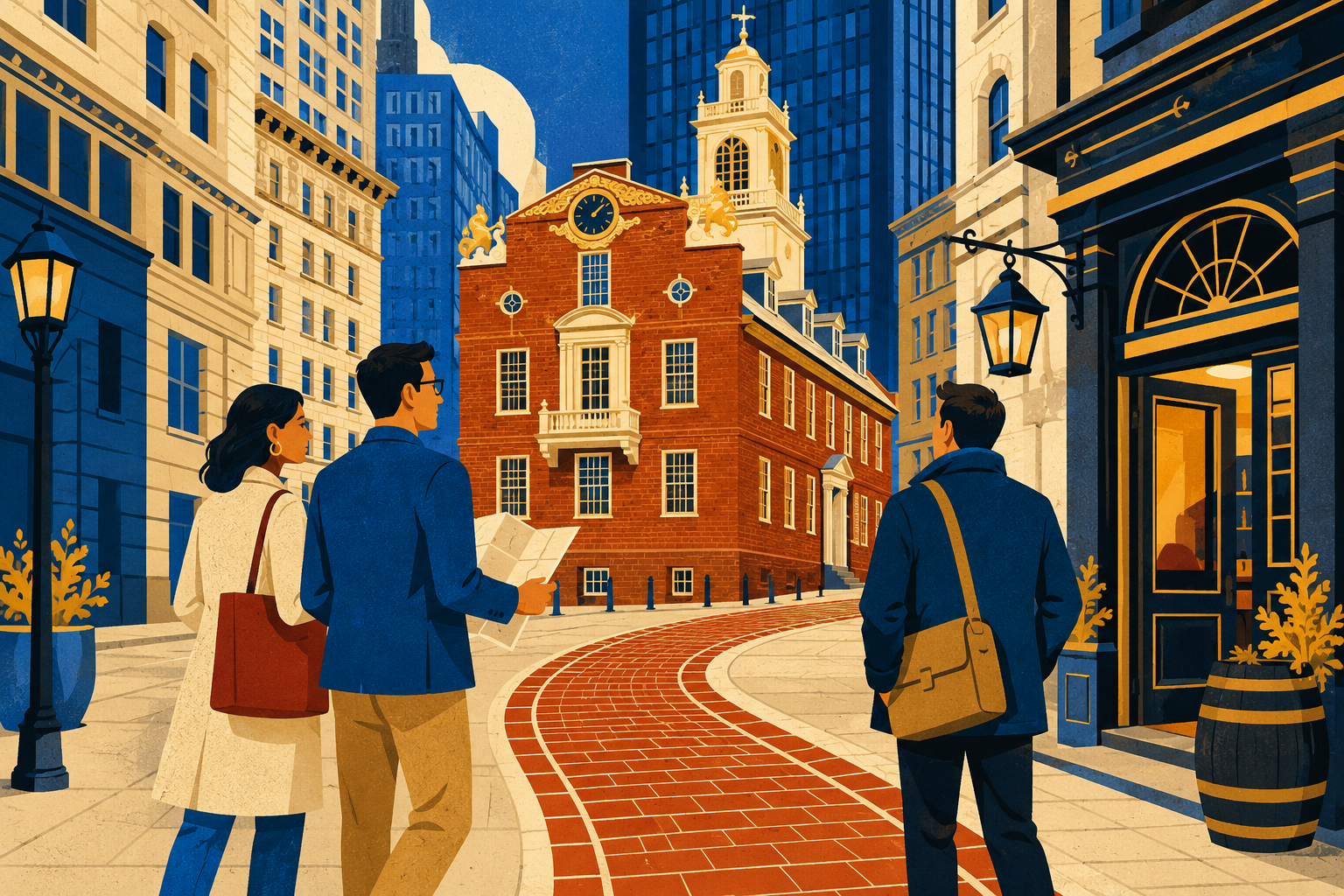
The best way to experience Boston history as an adult is to alternate formats. Walk the actual streets, step inside the rooms where decisions happened and let a skilled storyteller connect the details. That mix keeps the city from flattening into a parade of names and dates. Boston rewards curiosity, and there is always another corner, story or tavern waiting when you are ready for it.
Boston Crawling’s Independence Pub Crawl takes care of the tavern portion with an adults-only history tour pub crawl around Faneuil Hall and the Freedom Trail. It runs daily at 3:00 p.m. and 7:00 p.m., plus noon on Saturdays and Sundays, and lasts 2 hours and 15 minutes. An expert local guide leads fellow travelers to four bars while sharing Boston’s hidden and hilarious history. Drinks are available for purchase at each stop, so your ticket includes the stories and route while your bar tab remains a deeply personal matter.
Choose Your Freedom Trail Stretch
The Freedom Trail follows a 2.5-mile red line past 16 nationally significant historic sites. That sounds delightfully simple until you discover that 2.5 miles of Boston history contains museums, meetinghouses, burying grounds, churches, monuments and several tempting places to stop for something fried.
Instead of treating the full trail as a test of character, choose a section. The downtown stretch from Boston Common to Faneuil Hall delivers the Granary Burying Ground, Old South Meeting House and Old State House without demanding an expedition. The North End section adds the Paul Revere House and Old North Church. Charlestown brings in the USS Constitution and Bunker Hill Monument when your interests, schedule and shoes all vote yes.
The red line is a guide, not a command. Follow it until a building earns your attention, then go inside.
Stand Where Boston Argued in Public
Two of the strongest indoor stops sit only a short walk apart. Revolutionary Spaces operates the Old State House and Old South Meeting House, and the pair shows Boston’s political temperature from two different angles.
The Old State House, constructed in 1713, served as the center of royal government in the Massachusetts Bay Colony. The Boston Massacre unfolded outside it in 1770, and the Declaration of Independence was read from its balcony in 1776. At Old South Meeting House, thousands gathered on December 16, 1773, to debate the tea waiting in Boston Harbor before the Boston Tea Party began.
These places work because the rooms do some of the storytelling. Doorways, balconies and crowded meeting spaces turn sweeping phrases like “public unrest” into a much more immediate thought: everyone was standing remarkably close together while tempers rose.
Visit a Famous Person at Human Scale
Statues have a habit of making historical figures look as if they spent their entire lives staring nobly into the middle distance. The Paul Revere House offers a useful correction.
Built around 1680, the North End house was Revere’s home from 1770 to 1800. Its rooms connect the celebrated midnight rider to his work as a silversmith, his family and the ordinary logistics behind a life that later became legend. The building is compact, the visit is manageable and North Square gives you an excellent excuse to continue wandering through the North End afterward.
This is the stop for travelers who prefer details to heroic posing. You leave thinking about the person, not just the horse.
Pick One Experience With Production Value
If your attention improves when a museum adds movement and a little theater, Boston is happy to cooperate. The Boston Tea Party Ships & Museum uses historical interpreters, interactive exhibits and full-scale replica 18th-century sailing vessels for a guided experience centered on the events of 1773. Yes, visitors can toss tea into the harbor. No, you do not need to arrive emotionally prepared to defend the beverage.
For naval history, cross to Charlestown for the USS Constitution Museum. Hands-on exhibits, artifacts and personal stories explore “Old Ironsides” and the people who served aboard it. The museum and the ship operate separately, so check both official schedules and identification requirements before you go.
Choose one of these as your big immersive stop. Booking every historical attraction in a single day is how fascinating objects slowly become “another thing behind glass.”
Build a Day With a Second Wind
For a compact downtown plan, begin at Boston Common, follow the Freedom Trail to Old South Meeting House and the Old State House, then stop for lunch near Faneuil Hall. That leaves you close to the crawl meeting area without turning the afternoon into a transit puzzle.
If the North End calls louder, visit the Paul Revere House in the morning, eat nearby and wander back toward Faneuil Hall. Travelers headed to Charlestown should give the USS Constitution its own half-day and choose the evening crawl rather than stacking the day too tightly.
By dinner, you should have more than a camera roll full of brick buildings. You should have a few stories you can retell accurately, enthusiastically and possibly over a drink. Pick the sites that suit you, then book Boston’s history tour pub crawl for the part of the day when the guide takes over and the barstools appear.