How Boston Taverns Helped Start a Revolution
Before Boston sent tea swimming in the harbor and redcoats marching through the streets, the town spent years arguing about taxes, trade, power and who exactly had the right to boss whom around. Speeches mattered. Pamphlets mattered. Tavern rooms mattered, too. They supplied the tables, food, drink and steady traffic that helped political frustration grow into organized resistance.
That lively side of the story is right in Boston Crawling’s Independence Pub Crawl wheelhouse. The adults-only history tour pub crawl visits four bars around Faneuil Hall and the Freedom Trail while an expert local guide shares Boston’s hidden and hilarious colonial history. Crawls run daily at 3:00 p.m. and 7:00 p.m., plus noon on Saturdays and Sundays, and last 2 hours and 15 minutes. Drinks are available for purchase at the stops. History is included; your beverage decisions remain a personal matter.
Colonial Boston Needed a Group Chat
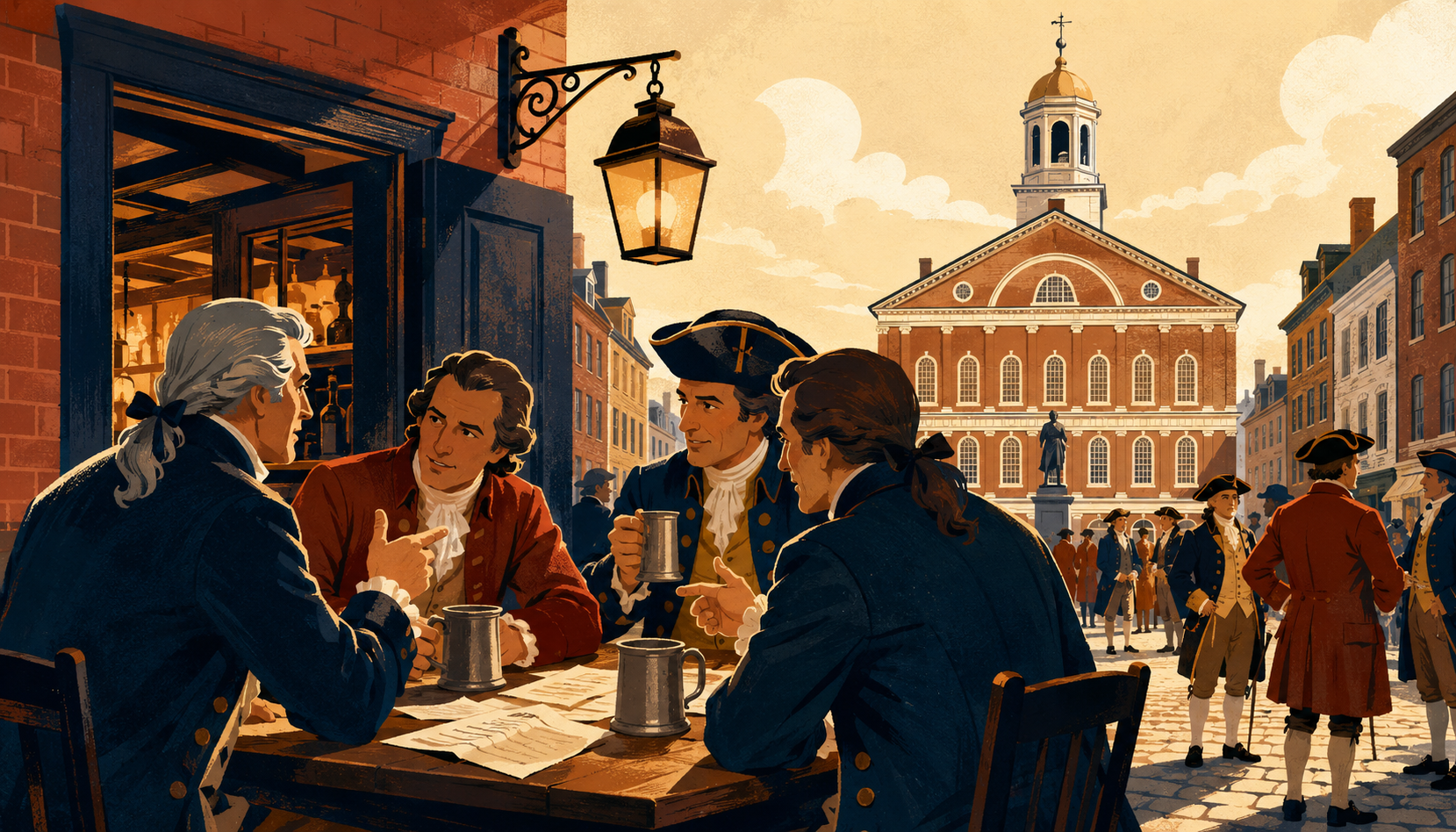
For a town without notifications, colonial Boston moved information surprisingly fast. Taverns operated as bars, dining rooms, lodging houses, informal newsrooms and neighborhood bulletin boards under one roof. Travelers arrived with reports from other towns. Sailors carried word from the waterfront. Merchants compared shipping news, while locals traded the kind of gossip that always travels faster when somebody lowers their voice first.
The mixed crowd made taverns especially useful. Artisans, laborers, merchants and visitors could hear the same report, argue about what it meant and carry their own version back into the city. Accuracy probably varied. Speed was excellent. Colonial Boston had discovered social media, except everyone had to share the same room and nobody could mute the loudest person.
Secret Plans Found a Home at the Green Dragon
Some tavern conversations went well beyond gossip. In a recollection written years later, Paul Revere explained that his group met at the Green Dragon Tavern, guarded its information carefully and tracked British troop movements. That is a serious amount of intelligence work for a place also responsible for refilling mugs.
Revere already served as one of Boston’s most trusted messengers. The National Park Service notes that he carried news of the Boston Tea Party to New York on December 17, 1773, the morning after the tea hit the harbor. Long before his famous ride to Lexington, he was moving information between Patriot networks. The Green Dragon gave those networks a regular meeting place, a familiar crowd and enough background noise to make a quiet conversation less conspicuous.
Politics Came With Dinner
Resistance also needed public support, and tavern gatherings helped turn political beliefs into shared events. The Massachusetts Historical Society preserves a list of 300 Sons of Liberty who dined together at the Liberty Tree Tavern in Dorchester in 1769. Three hundred diners is no longer a discreet planning session. That is a political movement ordering supper.
Public dinners, speeches and toasts allowed participants to celebrate alliances and show where they stood. Boycotts of imported goods brought politics into everyday purchases, so even the contents of a glass or dining table could carry a message. Taverns made political participation social. People did not simply read an argument and go home. They gathered, reacted and found out who else agreed.
Women Kept the Rooms Running
The best-known Revolutionary tavern stories tend to spotlight famous men, usually in coats with an unreasonable number of buttons. The businesses themselves depended on a much broader cast.
Women owned and operated taverns and sold alcohol under licenses of their own. The Massachusetts Historical Society holds Sarah Checkley’s 1764 Boston liquor license and notes that other women received similar licenses. Tavern keepers managed supplies, staff, customers and the daily complications created whenever food, alcohol, money and opinions occupied the same room. Revolutionary organizers got the dramatic headlines. Somebody still had to keep the place functioning.
When the Crowd Outgrew the Tavern
Boston’s biggest protests required bigger rooms. On December 16, 1773, thousands gathered at Old South Meeting House to debate what should happen to the East India Company tea waiting in Boston Harbor. Negotiations failed, the meeting ended and the tea took an unscheduled bath.
Old South hosted the mass meeting, while taverns supported the political relationships that existed between headline events. Boston needed both kinds of space: large halls for public action and smaller rooms where people could exchange intelligence, build trust and plan their next move. The Revolution was not one long tavern night. Taverns simply proved very useful whenever revolutionaries needed to find one another.
Follow the Red Bricks, Then Pull Up a Stool
The Freedom Trail connects 16 official historic sites across 2.5 miles. It shows where major events happened. Boston’s tavern stories add the human machinery behind them: messengers carrying reports, hosts running crowded rooms and colonists discovering that politics becomes much harder to ignore when it joins you for dinner.
Boston Crawling explores that side of the city around Faneuil Hall. You will visit four local bars and historic taverns, hear about Sam Adams, the man, not the beer, and trade stories with fellow travelers while an expert guide handles the dates, names and rebellious details. Book the Independence Pub Crawl and discover how much American history fits between four tavern stops.